Hawaiʻi Volcanoes National Park in one day: the order I’d do it in
One day in Hawaiʻi Volcanoes National Park, in the order I use: rim first, Kīlauea Iki late morning, Chain of Craters after lunch, glow after dark.

One day is enough if you start early and do not improvise the order. Show up at 10, queue for the lava tube, and you will leave thinking you missed the park. You did.
I lived on the west side and still went up about once a month. The first time I arrived at noon, did the viewpoints and left. I thought I had seen it. I had not.
Before you go
- Check the eruption status the day before. Kīlauea’s activity changes from week to week. The USGS Hawaiian Volcano Observatory posts daily updates, and the park’s official page lists closures and current fees.
- Fill the tank and pack lunch. There’s no fuel inside the park and very little food. Volcano village, just outside the entrance, has a gas station and a few places to eat.
- Dress in layers. The summit sits around 1,200 m (4,000 ft). It’s often 10–15 °C cooler than the coast, and it rains a lot. A warm layer and a rain jacket are not optional.
- Mind the vog. Volcanic gas can be strong near active vents. If you have asthma, heart or lung conditions, or you’re pregnant, follow the park’s air-quality advice and avoid the marked high-gas areas.
Morning: the summit, before everyone else
Kīlauea Visitor Center (opening time). Five minutes with a ranger is worth more than an hour online: they’ll tell you what’s erupting, what’s closed and where the glow is visible tonight. Grab a map.
Steam vents and Sulphur Banks. Short, flat, from the visitor center. Steam through the ground. Yellow crystals. It smells like sulphur. You are standing on an active volcano. That is the introduction.
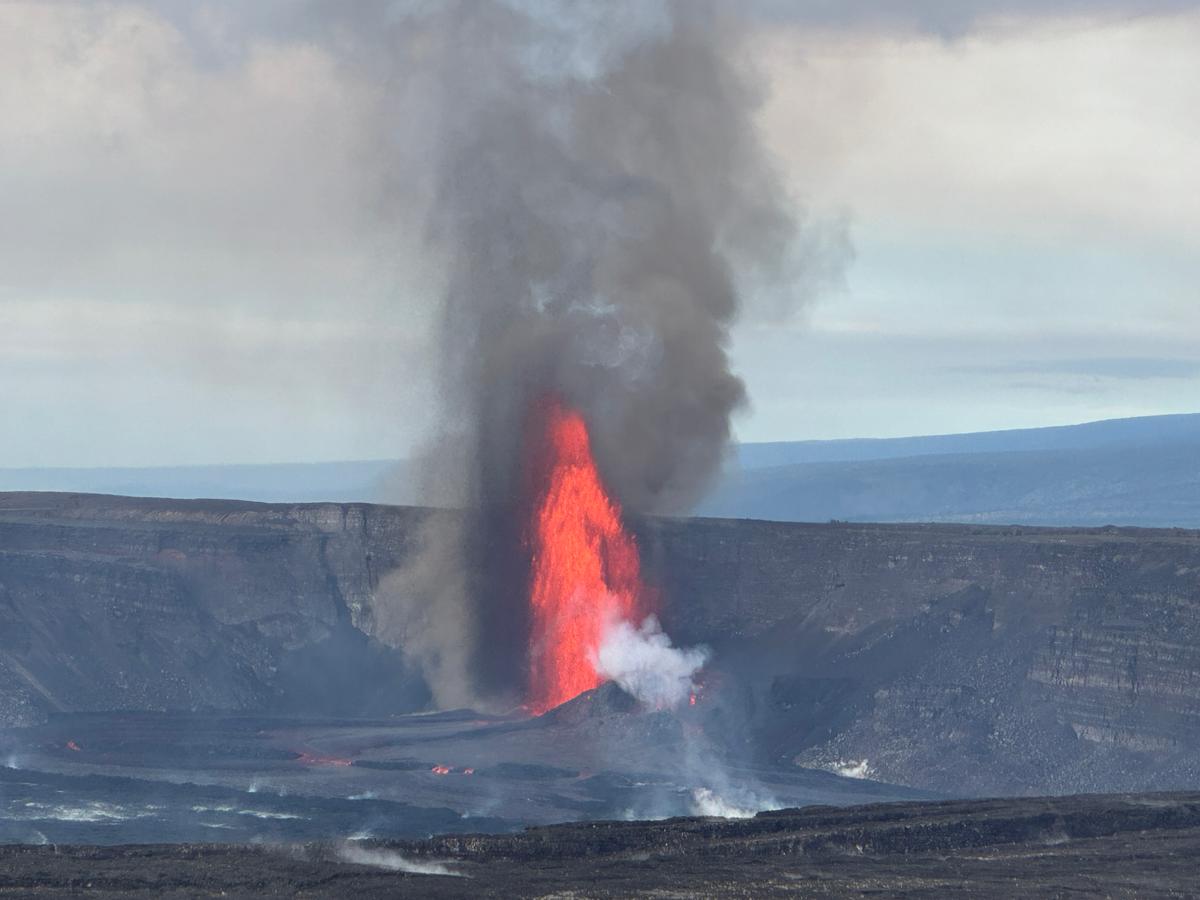
Crater rim viewpoints. Drive along the open part of Crater Rim Drive to the overlooks above Kaluapele, the summit caldera, and Halemaʻumaʻu crater. If there’s an eruption, this is where you see it by day.
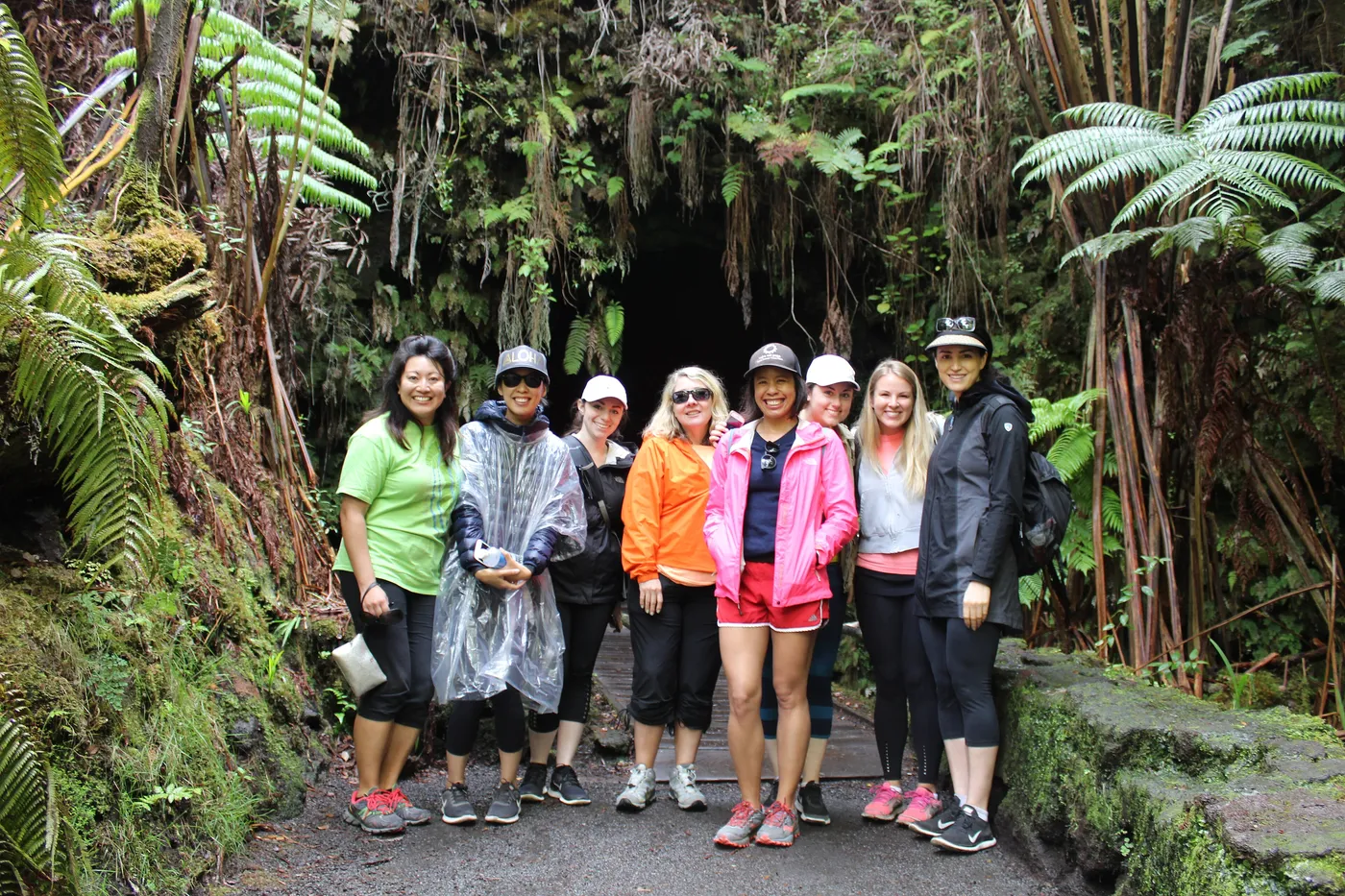
Nāhuku (Thurston Lava Tube) before 10 a.m. About 20 minutes: fern forest, then a lit tube you can stand up in. The car park is small. If it is full at 10:30, do the hike and come back after 3.
Late morning: hike Kīlauea Iki
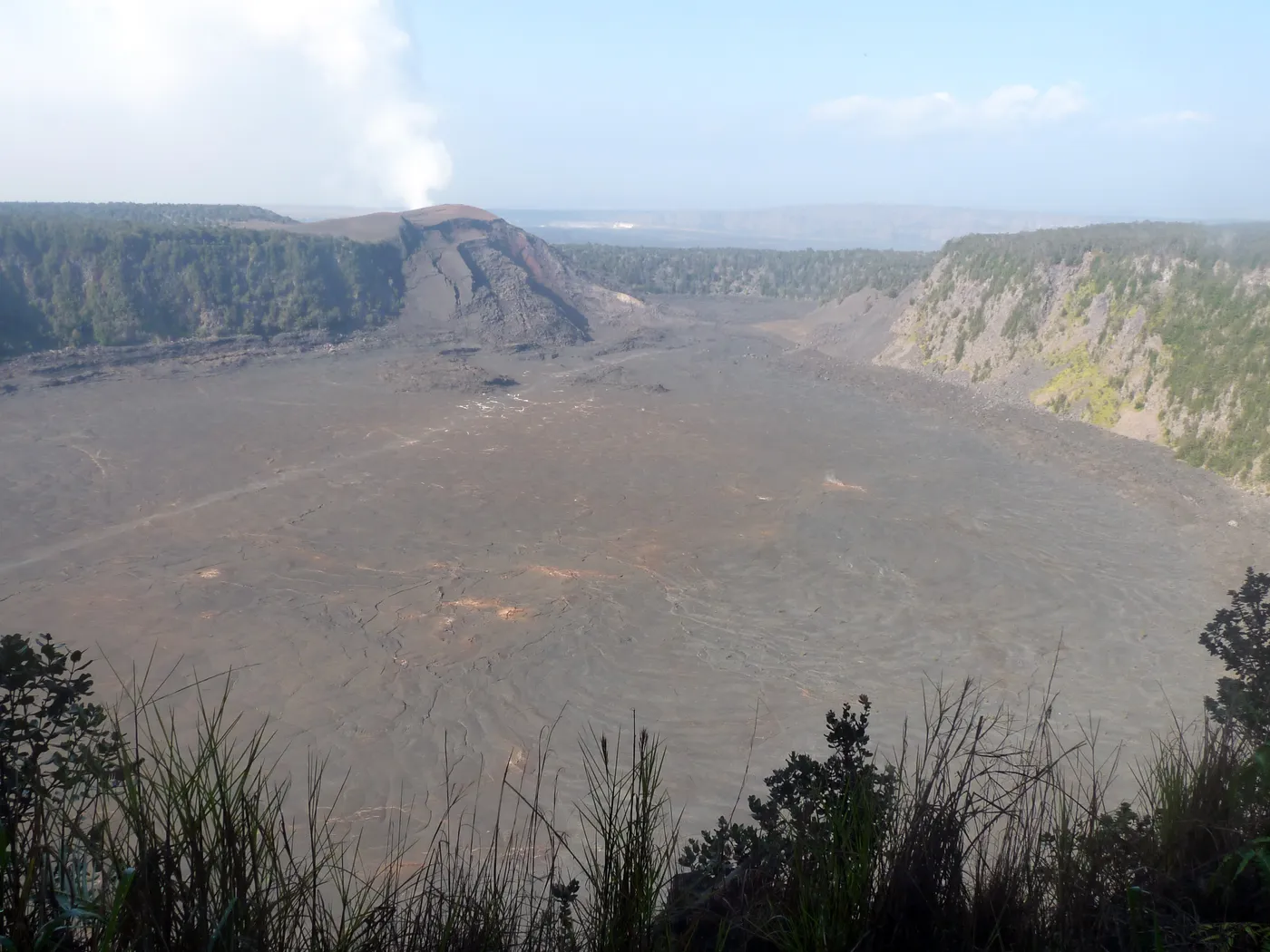
The hike is Kīlauea Iki. A loop of about 6.4 km (4 miles): rainforest, then the floor of a crater that was a lava lake in 1959. You walk the solidified surface. Cracks still steam.
Allow two to three hours. The descent and climb out are steady but not technical. Take water, sun protection and that rain jacket: the crater floor can be hot and wet within the same hour.
The floor sounds hollow under your shoes. Heat comes up through cracks you hear before you see them. Halfway across I stopped talking.
Lunch break
Picnic at a viewpoint, or eat at Volcano House on the crater rim if you want a table with a view. Either way, keep it short: the afternoon is a long, beautiful drive.
Afternoon: Chain of Craters Road to the sea
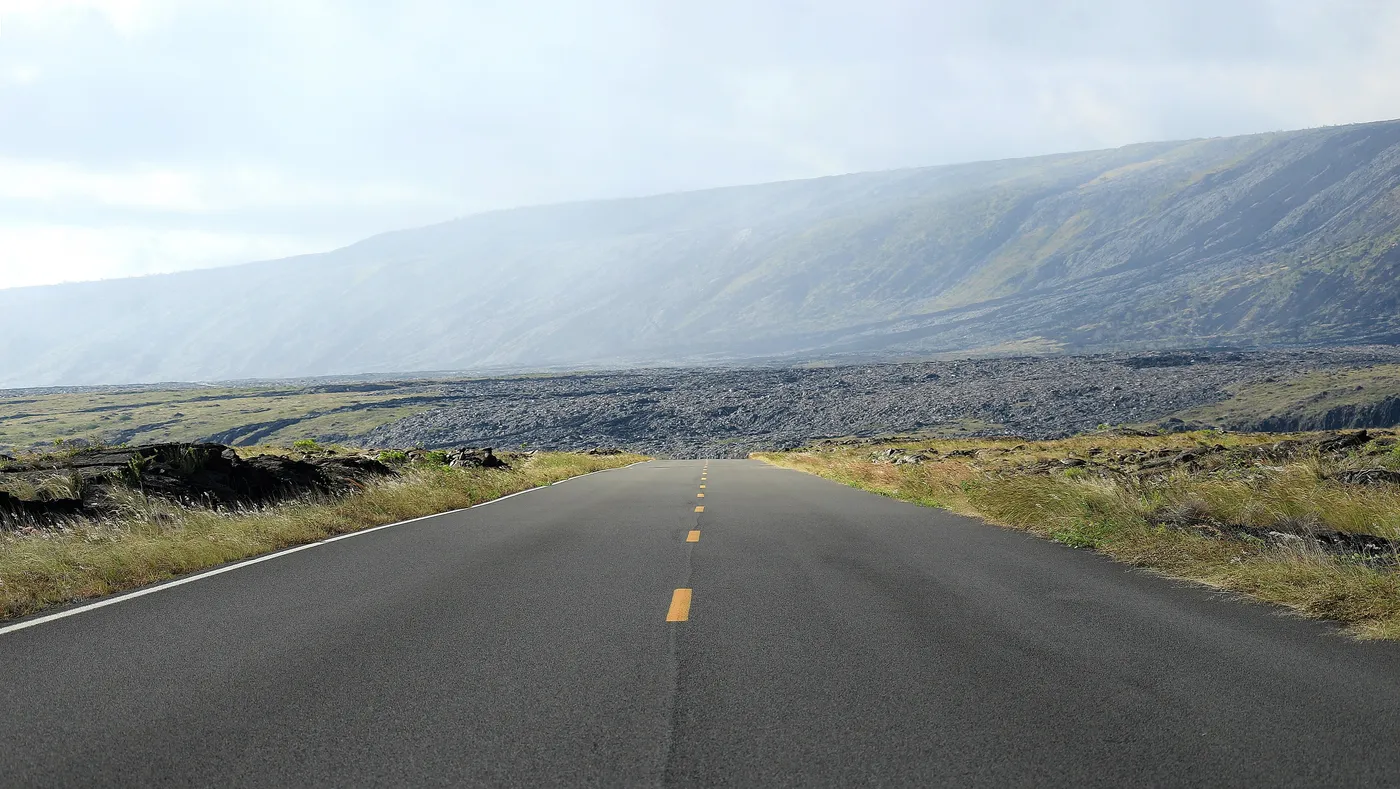
Chain of Craters Road runs about 30 km (19 miles) from the summit down to the coast, dropping more than 1,000 m along the way. Without stops it takes 45 minutes each way; with stops, plan three hours for the round trip.
Worth stopping for, going down:
- Pit craters along the upper road, like Pauahi, where the ground has simply collapsed.
- Lava flows from the 1970s, black and glossy, crossing the road in wide rivers of rock.
- Puʻu Loa petroglyphs: a boardwalk of about 2 km round trip to one of the largest petroglyph fields in Hawaiʻi, with thousands of carvings. Stay on the boardwalk.
- Hōlei Sea Arch at the end of the road, where lava cliffs meet the Pacific. Watch it from the viewpoint, not from the cliff edge.
There’s no water or fuel on this road. Turn around with at least a quarter of a tank.
Evening: the glow (when Kīlauea is erupting)
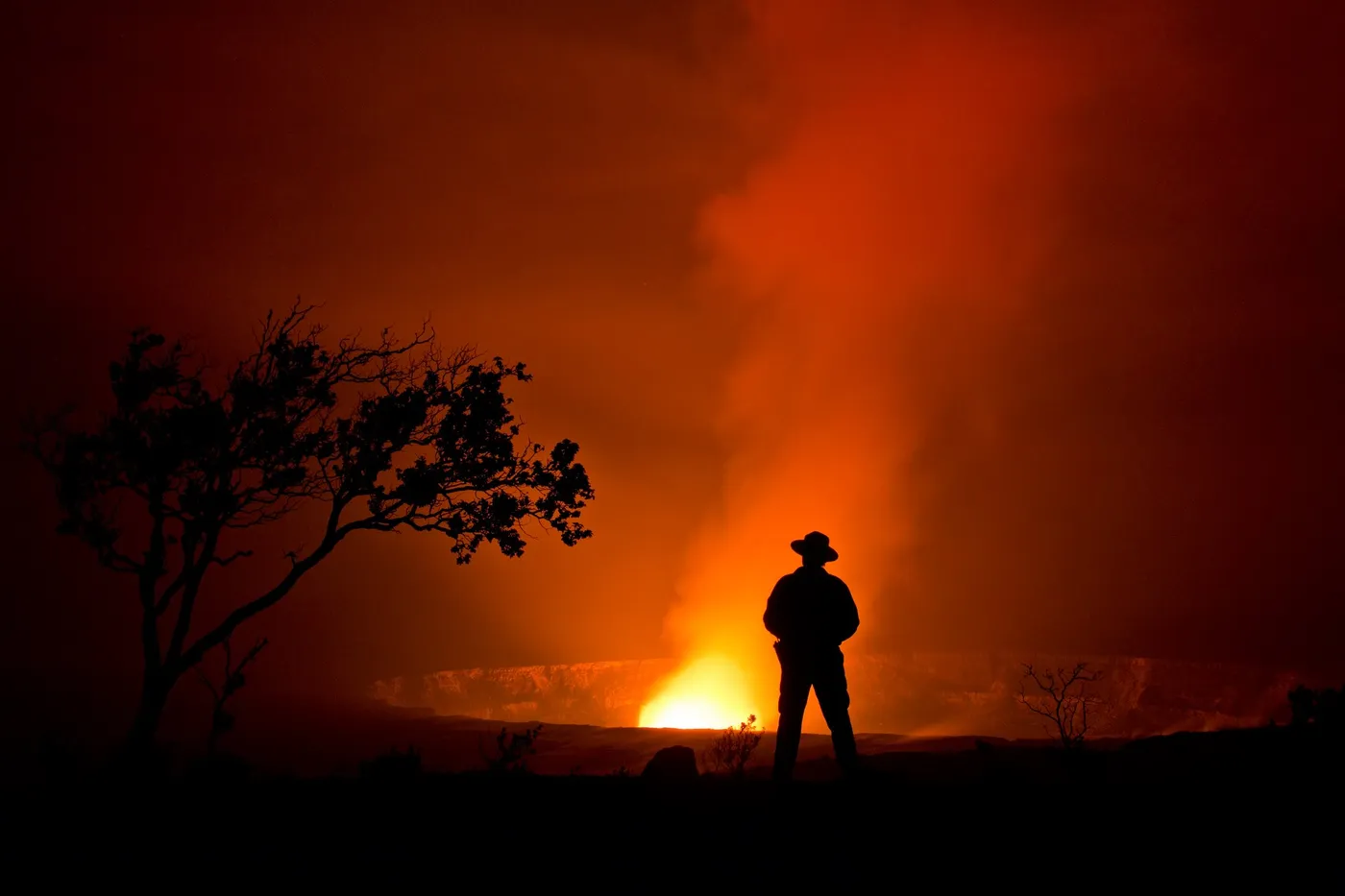
If the summit is erupting, go back up after sunset. The glow sits on the clouds and the gas plume. The ranger will have told you which viewpoint is the one that night. Not every overlook works.
Bring your warm layer and a headlamp. Parking near the main viewpoints fills fast after dark, so be patient or arrive just before sunset.
Where to sleep
Volcano village if you can. Cabins and B&Bs in the rainforest, five minutes from the gate, and you can come back for sunrise. Hilo works, about 45 minutes. Driving back to Kona the same night is a long wet road in the dark. I would not.
If you have more than one day
Add the Mauna Ulu trail, or the Kahuku unit on the Kaʻū side. Or just come back for a second sunrise. The first visit is often fog. The second one is the one you remember.
About the author
Alexis Guay
French web developer and former resident of Hawaiʻi Island. I write the guides I wish I’d had before my first week there.
More about meLinkedIn
Also available in Français, Español, Deutsch, Português, Italiano