Manta ray night snorkel in Kona when you can’t really swim
The Kona manta ray night snorkel if you can barely swim: you hold a light board, and what to ask before you book.

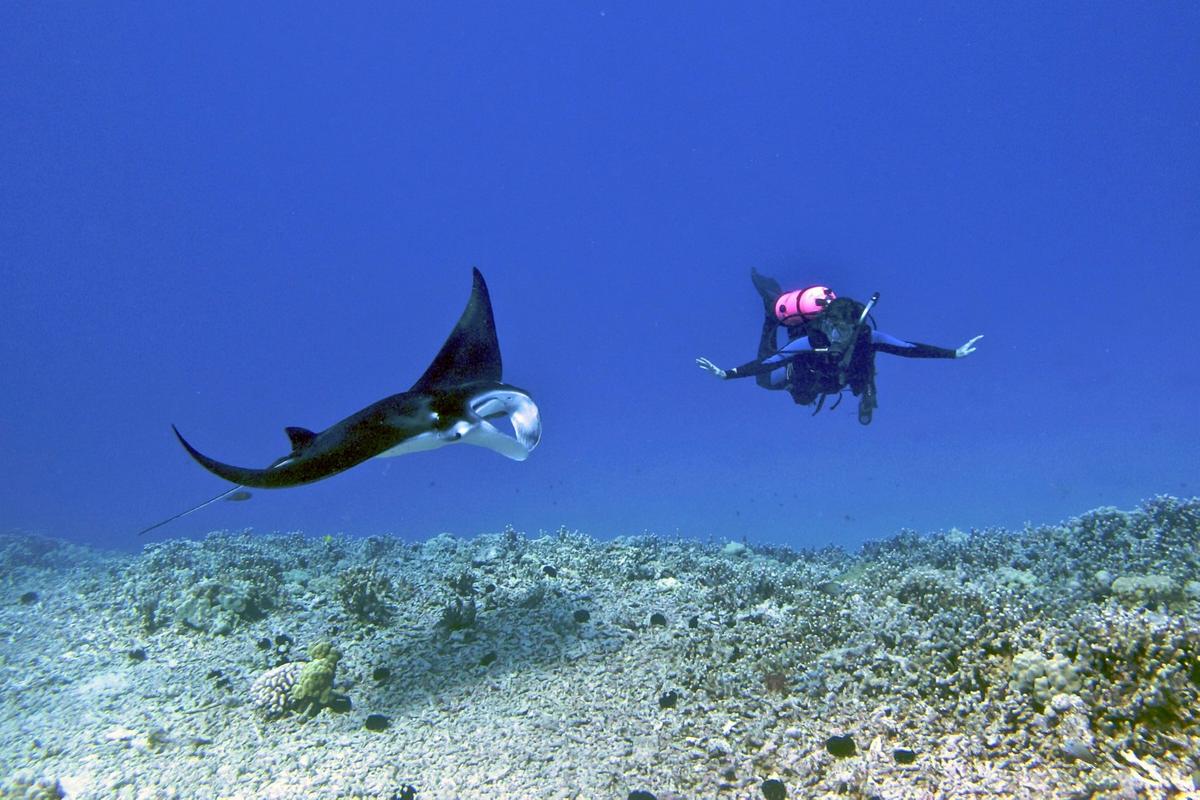
People talk themselves out of the Kona manta snorkel because they can’t really swim. On a decent boat, you barely swim. You hold a light board and look down.
A friend who can barely swim came anyway. She held the board with both hands the whole time. When the first manta rolled under us she laughed into her mask and did not let go.
How the night works
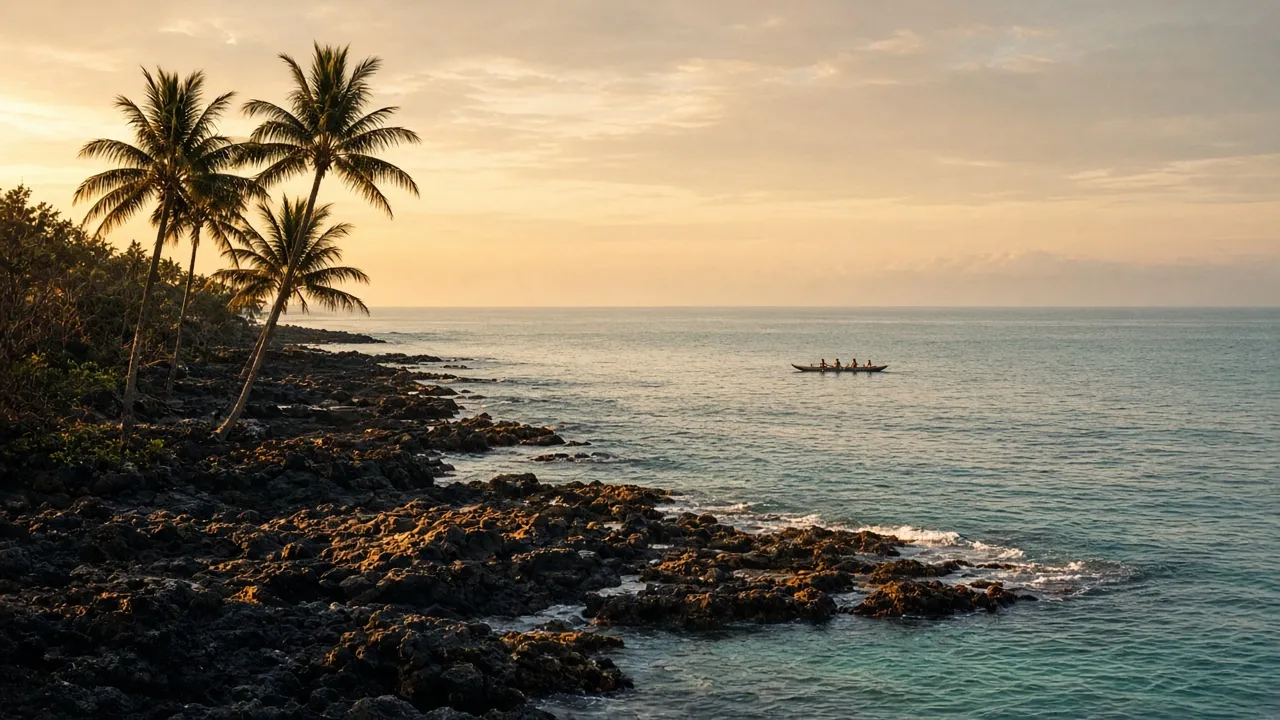
Reef manta rays live year-round along the Kona coast. At night, operators put strong lights in the water. The lights attract plankton, and the plankton attracts mantas, which come to feed, often just under the surface and right below you.
You don’t chase anything. You float in one spot, holding a lit board, and watch. The mantas loop underneath with their mouths open. Sometimes close enough to touch. Don’t. It scrapes the coating off their skin.
No stinger. No teeth that matter to you. They are filter feeders. Wingspan around three metres (ten feet), and they are better at missing you than you expect.
Why it’s fine if you can’t swim well
- You hold on the whole time. Most tours use a floating light board, a small raft or surfboard-like platform with handles. You hold it and stay there.
- You float, you don’t swim. You’ll wear a wetsuit, which already adds buoyancy, and most operators give you a pool noodle to put under your legs so you lie flat on the surface. Ask for a flotation vest too: good operators have them.
- There’s a guide in the water. Usually one per board, keeping an eye on the group.
- You can stay on the boat. Many operators sell cheaper ride-along tickets. Some boats have lights on the hull so you can see the mantas from the deck.
The honest caveat: if you panic in deep water at night, a vest will not fix that. Tell the crew when you book, and again when you board. They see nervous first-timers every night.
What to ask before booking
- Do you take non-swimmers, and what flotation do you provide? You want to hear “vests and noodles”, not just “wetsuits”.
- How many people per light board? Smaller groups mean more space and calmer water around you.
- What happens if no mantas show up? Sightings are frequent but not guaranteed. Many operators offer a free rebooking.
- Which site? The two main spots are near Keauhou Bay, south of Kailua-Kona, and Garden Eel Cove, near the airport. Both work; the one closer to where you’re staying is a fine choice.
- Do you follow the manta viewing guidelines? Responsible operators brief you on not touching or diving down on the mantas. If they don’t mention it, that’s a sign.
Practical tips
- Book early in your trip. Bad weather or rough seas cancel tours. If yours is on night two, you have time to reschedule.
- Seasickness is the real risk, more than swimming. If you’re prone to it, take something an hour before (ask a pharmacist), eat light and look at the horizon on the boat ride.
- It gets cold. The water is around 24–27 °C (75–80 °F), but after 45 minutes floating at night you’ll be chilly. Bring a warm layer and a towel for the ride back.
- Leave the camera. Unless you have a proper underwater housing, phone photos at night are disappointing. Many boats sell photos taken by the crew.
- Skip the sunscreen. It’s night: nothing to protect, and less in the water is better for the reef.
Whether to book it
If you pay for one activity, pay for this. Two to three hours, boat included. You do not need to be fit. You need to put your face in the water.
I would book it again. The swimming is the easy part. The nights that went wrong were the rough boat rides.
About the author
Alexis Guay
French web developer and former resident of Hawaiʻi Island. I write the guides I wish I’d had before my first week there.
More about meLinkedIn
Also available in Français, Español, Deutsch, Português, Italiano